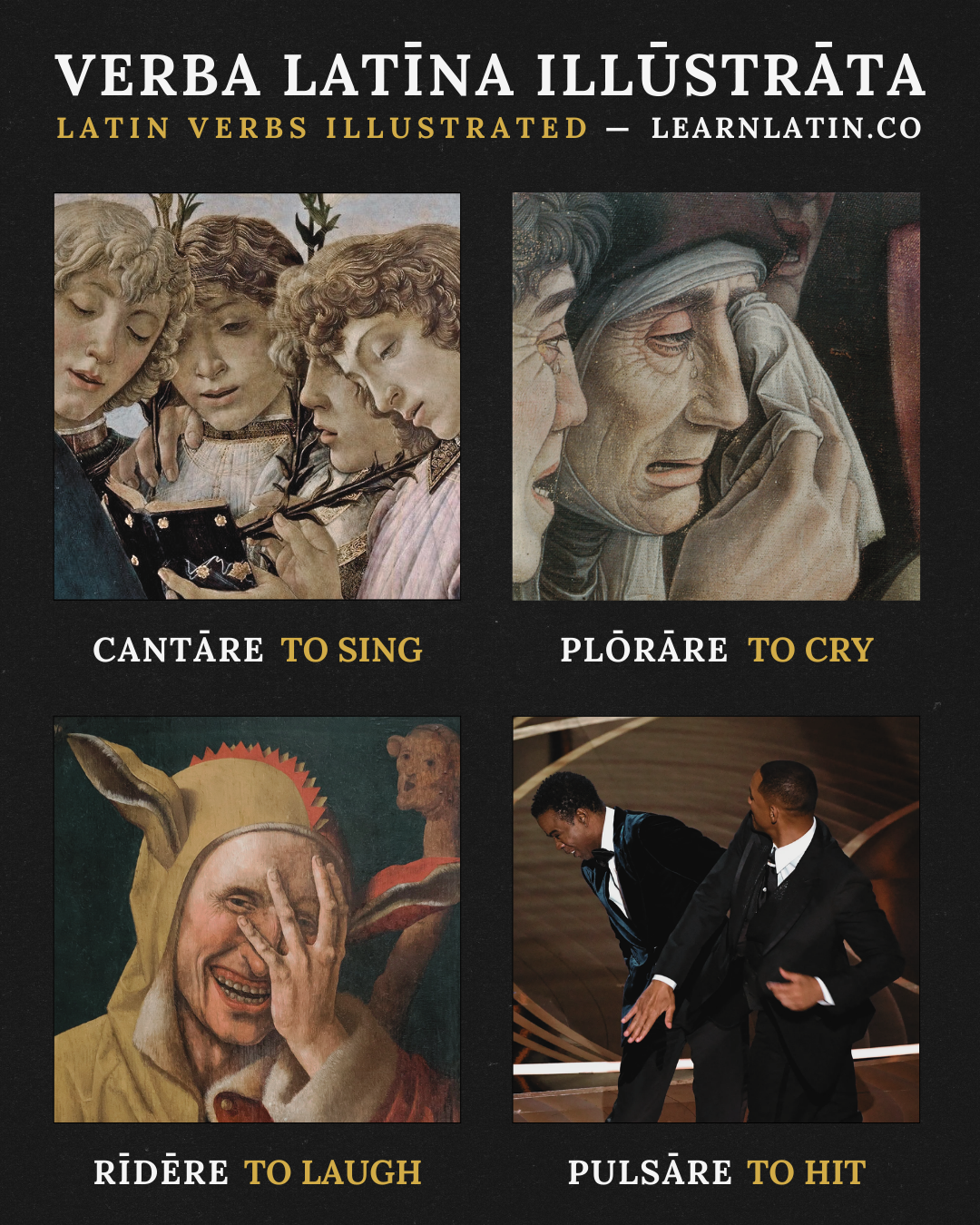
Latin is often imagined as a language frozen in marble—the language of inscriptions, laws, and philosophical treatises. But Latin was first and foremost a living language, spoken by ordinary Roman citizens going about their daily lives: opening amphorae, kneading bread dough, lighting oil lamps.
The vocabulary for these actions exists, and it is entirely possible to use the same verbs attested in the sources by Cicero, Caesar, and other classical authors to describe the modern world and everyday life.
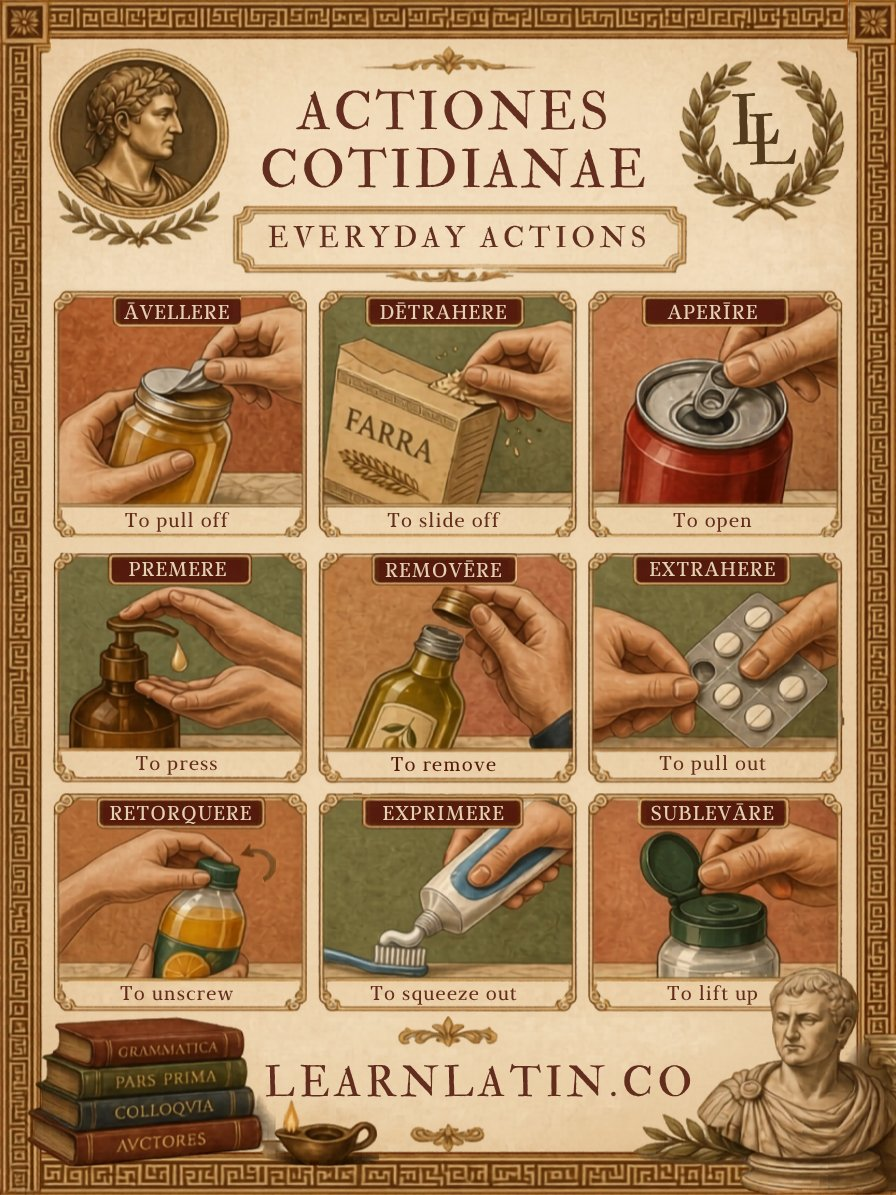
In today’s lesson, we explore a set of everyday actions related to opening and handling common objects—simple gestures such as pulling off, sliding open, pressing, removing, extracting, or unscrewing. Though ordinary, these actions are expressed in Latin through precise and often elegant verbs, attested in the sources and used by classical authors.
This poster is part of an ongoing series exploring how Latin maps onto the everyday world—not to be anachronistic, but to show that the language is far more alive and flexible than most people assume.
Learning to think in Latin through simple physical actions is one of the most effective ways to internalize the language at a deeper level than grammar drills alone can reach. It is also a decisive step toward achieving fluency in both spoken and written Latin.
Your Next Step: Learn Latin
If this has piqued your interest and you’d like to learn Latin from scratch, my course Latin for Beginners is the perfect place to start.
→ Latin for Beginners — Full Course (Start Here)
With over 30 hours of video lessons, step-by-step grammar explanations, and progressive readings in authentic Latin, you’ll learn not only to read the classics—but to think in Latin.