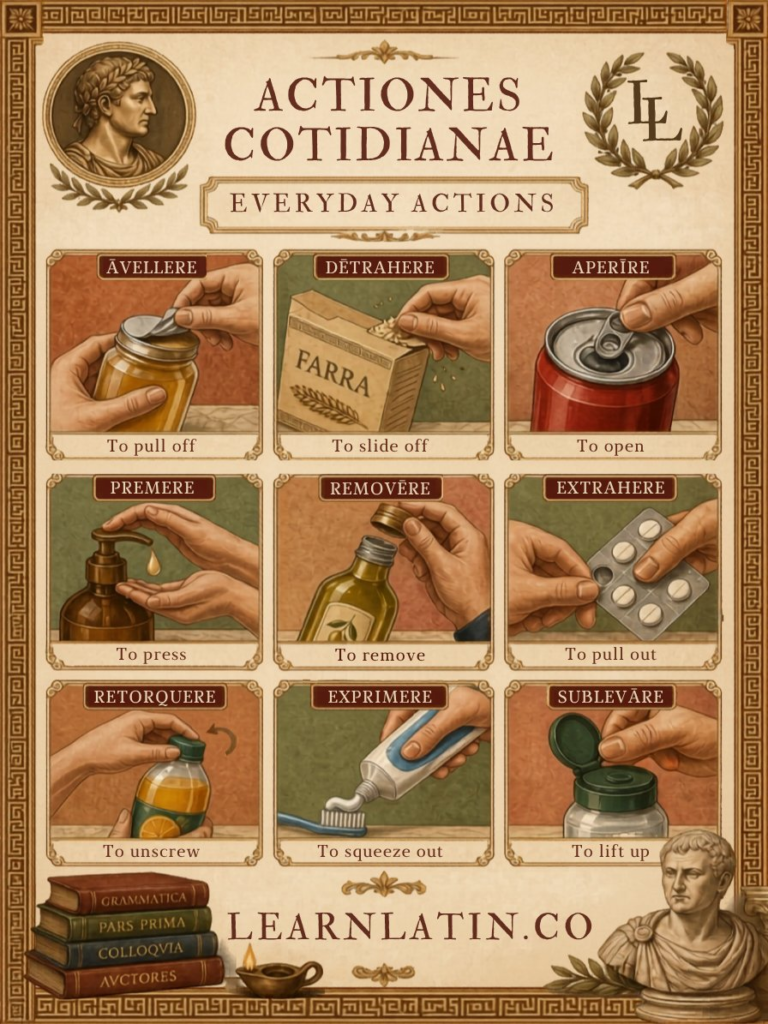
How Latin Maps Onto Everyday Life
Latin is often imagined as a language frozen in marble—the language of inscriptions, laws, and philosophical treatises. But Latin was first and foremost a living

Latin is often imagined as a language frozen in marble—the language of inscriptions, laws, and philosophical treatises. But Latin was first and foremost a living
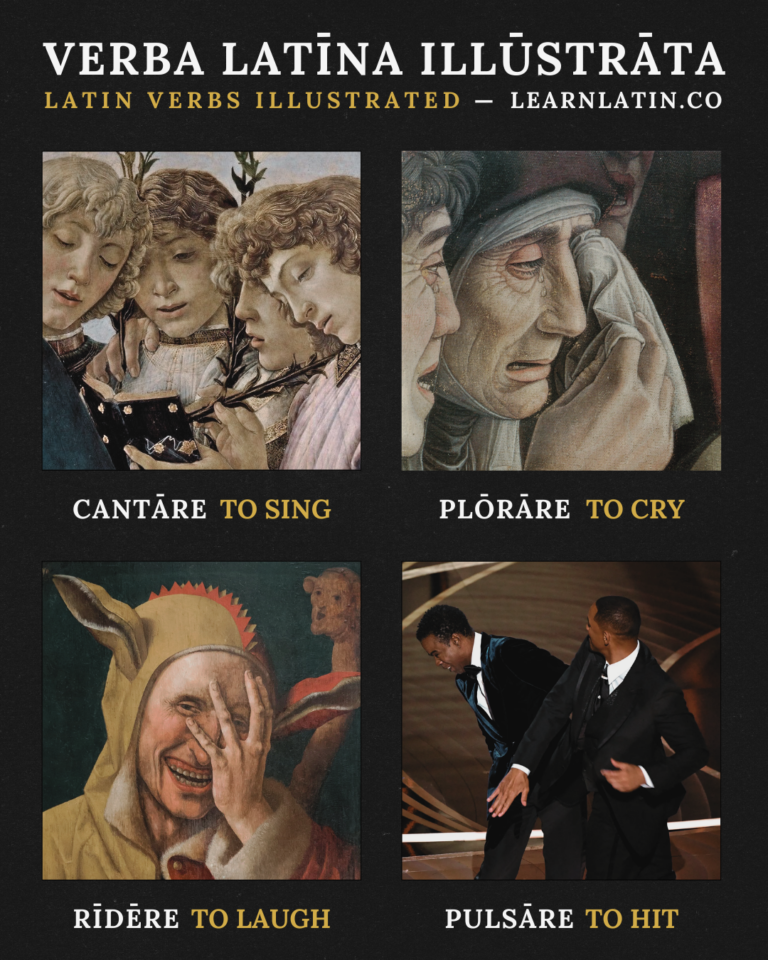
A Bite-Size Visual Approach to Vocabulary Learning Not all of us can dedicate several hours a week to studying Latin. But all of us can
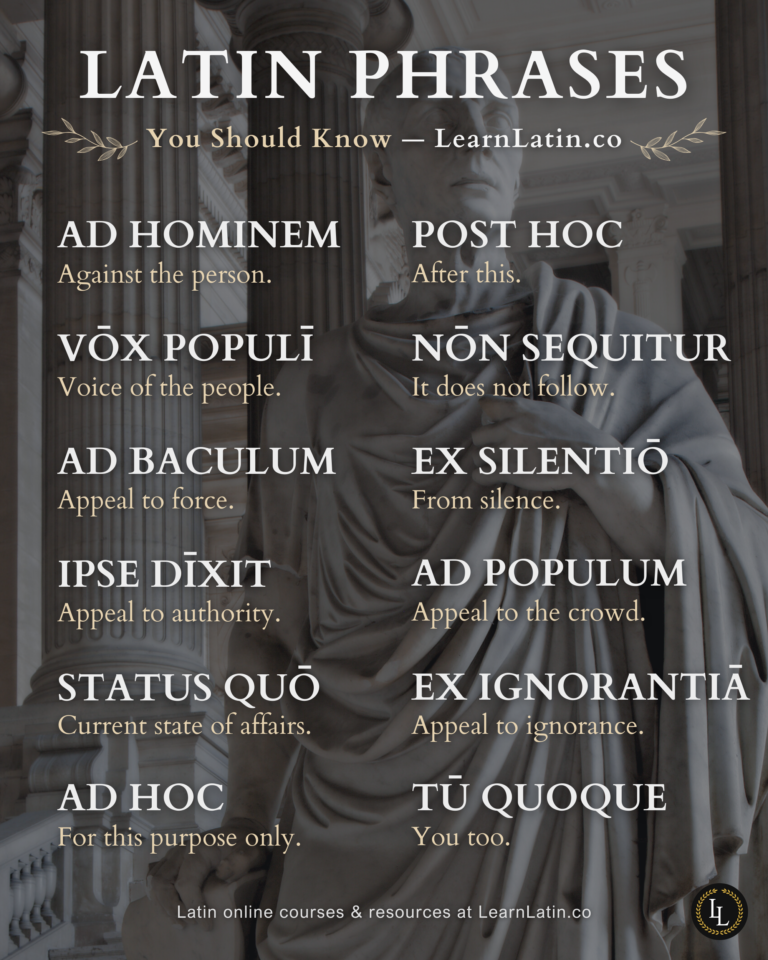
When we find ourselves in the middle of a heated discussion, it is not uncommon for our opponent to resort to manipulation or faulty reasoning
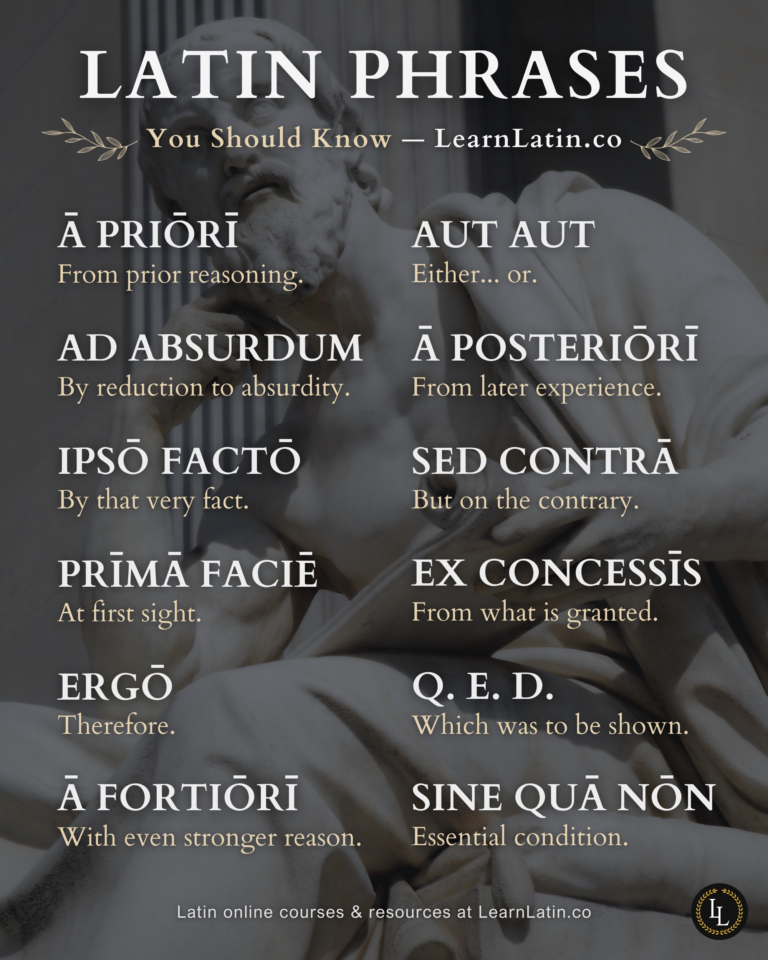
When we talk about logic and argumentation, we often use Latin without noticing. Expressions like ergō, ā priori, or prima facie appear in philosophy, law,
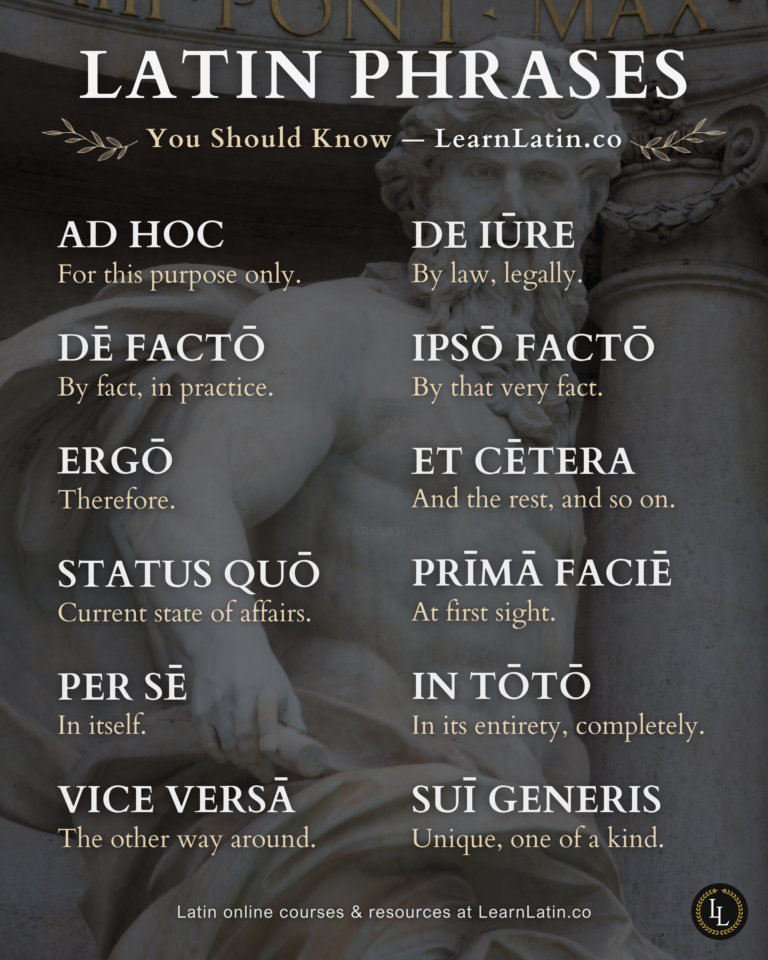
Latin never really disappeared. Many Latin expressions are still part of everyday educated language, especially in law, philosophy, and academic writing. Phrases like ad hoc, per se, or status quo are familiar—but their

Much of the medieval world reaches us not through modern books, but through handwritten manuscripts. These fragile objects—copied by hand, annotated, corrected, and preserved over

After the first encounter with Latin, many learners reach a crucial moment: the basics are familiar, but reading still feels slow and uncertain. Latin II:

Learning Latin today is not an antiquarian exercise. The Latin language remains essential for understanding the foundations of Western civilization, engaging directly with historical sources,

Latin is unique among European languages in the length and continuity of its intellectual tradition. For over two thousand years, it served as the shared